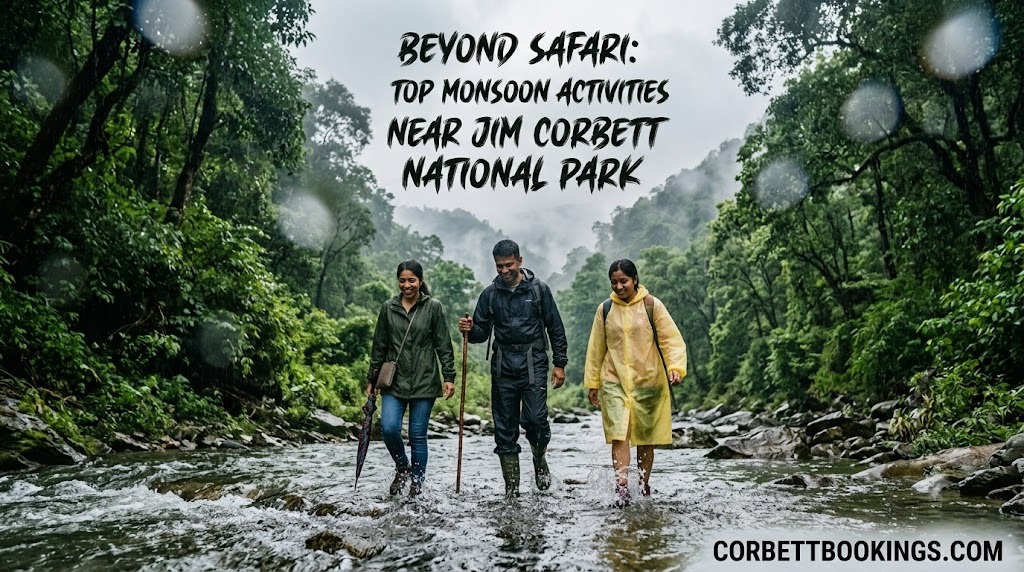
Most people think of Jim Corbett National Park as a safari destination. Tiger sightings, jungle jeeps, early morning drives through dense sal forests. And while all of that is very real and very thrilling, there is a whole other side to Corbett that most travelers never discover especially during the monsoon.
From July to September, the rains transform this region into something almost surreal. The hills go deep green. The Kosi River swells with life. Waterfalls roar back to full strength. And the crowds? Almost nonexistent. If you are the kind of traveler who wants to go beyond the usual, monsoon is actually the best-kept secret in Corbett National Park tourism.
Here is your complete guide to making the most of your monsoon visit with or without a safari.
Explore the Scenic Kosi River
The Kosi River feels like the lifeline of the Jim Corbett region, and yeah it kind of changes everything. During the monsoon it transforms completely. The water runs fast and clear, sort of framed by thick riverbanks and misty forest hills. If you walk along the Kosi, it becomes this peaceful, soul-filling bit of time… you don’t hear much besides birdsong and that steady rush of water.
Now for the adventure folks, the Kosi also has river rafting in this season. Because the water level is up, you get natural Grade II, and Grade III rapids, so it fits both beginners and experienced rafters. Just remember, rafting stops if the area receives very heavy rainfall, so check local conditions before booking, and don’t assume anything.
Visit Corbett Waterfall
About 26 km from Ramnagar , along the Kaladhungi road, the Corbett Waterfall feels a bit like a secret place that basically comes alive only when the monsoon hits. The water tumbles down from around 20 meters into a shaded pool below, and all of it sits quietly in the middle of a woodsy scene, with tall teak trees, plus that steady birdsong chatter that just never really stops.
From where you park , it’s a short 1.5 km stretch by a decent trail that guides you right up to the base. You can’t swim there, but honestly the mood is the point, cool mist everywhere, forest sounds close by, and no big crowds, so it ends up being one of the best no-cost things to do near Jim Corbett in the rainy season. Carry your own food and water since there are no food stalls near the falls.
Enjoy Nature Walks Around the Forest
When the heavy zones of the park are closed for safari, the forest does not close for walking. Buffer zones and resort-side forest trails remain accessible, and honestly, a quiet morning walk through the Corbett wilderness in monsoon is something words struggle to capture.
The forest kinda smells like wet earth, and also those fresh new leaves. Along the trail edges, wild orchids show up, almost like theyre waiting. You might catch deer grazing out in the open, peacocks doing this whole show with their feathers after rain, or a mongoose darting through the undergrowth. Most resorts around Ramnagar put together guided nature walks, and honestly it’s a nice way to get a real connection with the ecosystem, without having to bother with a safari permit.
Birdwatching in Monsoon
Serious birdwatchers know that monsoon is kinda peak season in Corbett , you feel it in the air. With the dense green cover, freshwater sources , and a crazy high insect load, it turns into this big feeding frenzy, across quite a lot of species. Migratory birds start arriving at their breeding grounds, and the resident ones get more vocal, and easier to spot than any other time of year, honestly.
Keep your binoculars ready anyway, for kingfishers perched on riverside branches, painted storks hanging around wetland edges, flycatchers flitting through monsoon canopy, and that dazzling quick flash of a crimson sunbird on a flowering shrub. Also, the Pawalgarh Conservation Reserve near Ramnagar is a lesser-known birdwatcher’s paradise, and it’s extra active during the rains.
Experience Riverside Camping
Imagine you wake up inside a tent near the Kosi River, fog still kinda clinging to the trees, and the rushing water sound just filling up the morning air. Riverside camping around Jim Corbett in the monsoon season is one of those underrated experiences in Uttarakhand , that many people kinda skip.
Near Ramnagar, you’ll find a few eco camps and adventure operators offering monsoon camping packages, you know with bonfire evenings, gentle river walks, and stargazing when the sky clears between the showers. It’s a really good way for families, couples and small groups to be out in the wild, but without the worry of a safari timetable.
Go for a Village Tour
The villages surrounding Jim Corbett National Park, especially Kumaoni settlements like Kyari — offer a completely different kind of travel experience. Monsoon makes these villages impossibly beautiful. Terraced farms turn bright green. Marigolds bloom along stone pathways. And the locals are often more relaxed and welcoming during the quieter off-season.
A guided village tour lets you see how Kumaoni families live, sample home-cooked food, watch traditional craft demonstrations, and understand how local communities coexist with the wildlife that surrounds them. It is meaningful travel that gives you far more than a forest sighting ever could.
Visit Garjiya Devi Temple
Perched on a massive rock in the middle of the Kosi River, Garjiya Devi Temple is one of the most dramatic sacred sites in Uttarakhand. The temple is dedicated to Goddess Garjiya Devi, believed to be an incarnation of Goddess Parvati, and is considered deeply auspicious by devotees across the region.
Located about 14 km from Ramnagar, the temple stands on the edge of the Corbett forest, surrounded by scenic hills and lush natural beauty. The whole river rock setting looks really striking, especially when the Kosi is running hard. Also , one important thing to keep in mind. During the peak monsoon season , the water level may jump a lot, so the temple can become temporarily unreachable. Try to go at the start of monsoon, like late June through early July, or just wait till September, when things start to ease and the levels begin to drop. For the best experience, morning visits are usually better so you can dodge the rush.
Enjoy Local Cuisine
Monsoon and Kumaoni food are a natural pairing. After a forest walk or a morning along the river, few things match sitting down to hot aloo ke gutke (spiced potatoes), bhang ki chutney, mandua ki roti (finger millet flatbread), and a steaming bowl of dal. Local dhabas near Ramnagar serve honest, affordable Kumaoni meals made from seasonal produce.
Resorts in the Corbett belt also pull out their monsoon menus during this season — think pakoras with masala chai, sweet corn roasted over coals, and slow-cooked mutton dishes served as the rain falls outside. Do not miss the chance to eat locally; it is a highlight of any Corbett trip that most tourists overlook.
Photography Tours
For photographers, the monsoon around Jim Corbett is, well… kind of spectacular, nothing short of it. The forest basically turns into a living canvas , layered greens everywhere, dramatic skies too, and that delicate light that feels almost quiet. Even the animal coats seem freshly polished , vibrant, and a little unreal. Mist drifts through the valleys at dawn and you can catch it moving slowly, like a soft film. Waterfalls end up framing nearly every trail, not just one path. Also because the tourist crowds stay low, you end up with clean, uncluttered compositions, without all that visual noise.
Several resort packages with a photography slant across Corbett National Park offer guided early morning and evening sessions. They usually include naturalist-guides, people who really know the best corners for birds, reptiles, plus those forest landscapes that look layered even when you’re standing still. Whether you’re using a smartphone or a professional DSLR , the monsoon visuals are impossible to ignore.
Relax at a Riverside Resort
Sometimes, the best monsoon experience is simply sitting quietly and letting the forest reveal itself. Riverside resorts near Jim Corbett, especially those along the Kosi, offer a deeply restorative experience during the rains. The sound of the river, the mist in the trees, the distant call of a peacock — it is the kind of rest that actually recharges you.
Resorts like Aroma Heavens in Garjiya and others near Ramnagar offer comfortable stays at reduced monsoon rates, often bundled with meals, nature walks, and cultural evenings. If you are planning a monsoon trip and want both comfort and nature access, booking through corbettbookings.com gives you good options across budgets — from jungle lodges to premium riverside stays — without the peak-season price pressure.
Monsoon Travel Tips for Jim Corbett
Pack the right gear. Waterproof trekking shoes are non-negotiable on any forest trail. Carrying a light rain jacket — umbrellas are impractical in dense forest. A good insect repellent is essential.
Book accommodation in advance even during off-season. The best riverside resorts and jungle lodges fill up faster than people expect, even in monsoon. Always choose a resort on higher ground to avoid any waterlogging issues.
Check zone status before planning safaris. The Jhirna, Dhela, and Phato zones remain open during monsoon for gypsy safaris. Dhikala and Bijrani zones are generally closed.
Keep a flexible schedule. Rain can pause activities without warning. Build buffer time into each day and treat an unexpected downpour as part of the experience rather than a disruption.
Carry cash. Many local eateries and village guides work on cash only.
Why Visit Jim Corbett National Park Beyond the Safari?
Here is the honest truth: a safari is a chance encounter with wild animals. It is thrilling, yes, but it is never guaranteed. What is guaranteed in Corbett is, well , the forest itself — the air, the river, the birds, that long silence, the food, the culture, and that feeling of being somewhere that still belongs mostly to nature, not just a backdrop or something . The monsoon strips away the crowds , drags prices down , and it uncovers a more muted , richer version of the place. If you have only ever come to Corbett for a tiger spotting, then you’ve seen one chapter only of a much longer story that keeps going.
FAQs: Monsoon Activities Near Jim Corbett
Yes, Jhirna, Dhela, and Phato zones remain open, while most core zones stay closed.
Early July and late September are ideal for pleasant weather and lush greenery.
Yes, subject to safe water levels and weather conditions.
Usually yes, but access may be restricted during high river levels.
Yes, many resorts offer attractive off-season discounts.
Carry rainwear, waterproof shoes, insect repellent, quick-dry clothes, and a dry bag.
Yes, if you follow safety guidelines and travel on approved routes.
Conclusion
Jim Corbett in the monsoon is not a compromise, it’s kind of a separate experience entirely. It feels quieter, greener, cheaper and honestly, more intimate than anything peak season throws at you. From the roar of the Kosi River to those early morning bird watching sessions, from Kumaoni village meals, to calm evenings at a forest resort, everything around Corbett during the monsoon season gives you a bond with nature that goes far deeper than just one jeep safari.