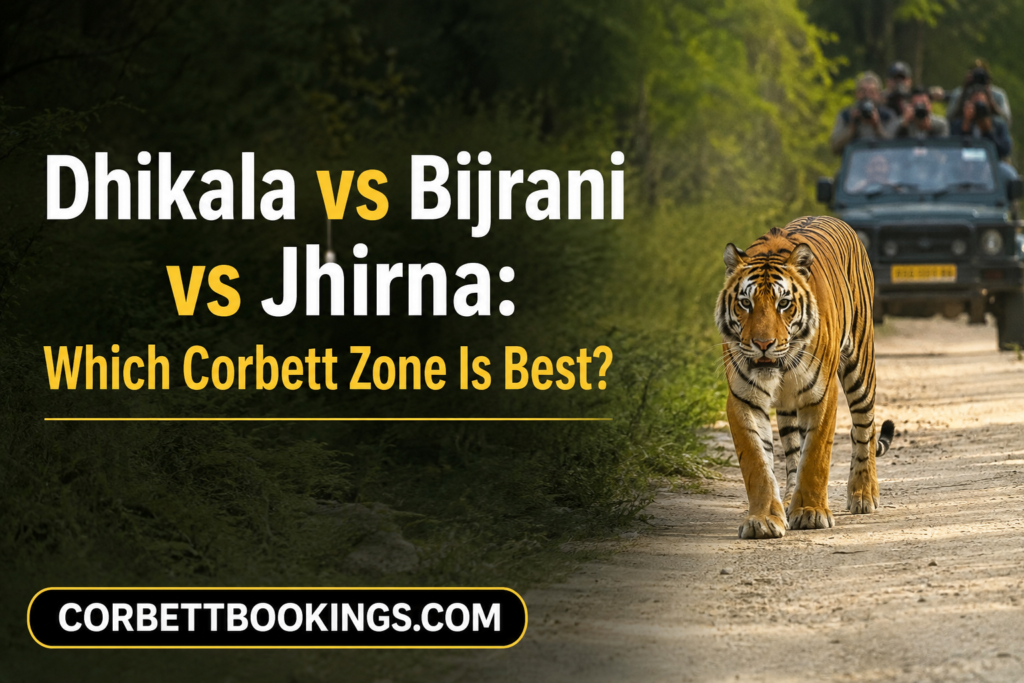
Jim Corbett National Park is not just one place— it is more like a bunch of little worlds tied together into a single tiger reserve . When first time visitors begin planning their safari, there’s always that one question that pops up first, like where do I even start with the zones? Dhikala, Bijrani and Jhirna zone are the three names that dominate nearly every conversation about Corbett safari zones. And yeah, each one gives you a genuinely different vibe. Picking the wrong option for your travel style , the season, or even your budget can mean you miss the whole magic, like completely, and that would be such a waste.
This guide breaks down all three zones clearly, so you can make a confident decision before you book.
Dhikala Zone: The Heart of Corbett
Dhikala is the crown jewel of Jim Corbett National Park. It sits deep inside the core area of the forest, spanning the Patli Dun valley alongside the Ramganga reservoir. This is the largest zone in the park and the one with the highest tiger density.
What makes Dhikala Safari Zone stand apart is its vast chaur grasslands. These open meadows stretch for kilometres and attract enormous concentrations of prey animals — spotted deer, sambar, wild boar, and elephants. Where prey gathers, tigers follow. This is why wildlife enthusiasts who are serious about big cat sightings almost always prioritise Dhikala zone.
However, the Dhikala zone comes with important conditions. Day visitors cannot take a gypsy safari here — only canter safaris are available for day trips, while gypsy safaris are reserved exclusively for overnight guests staying at the Dhikala Forest Rest House. The zone is also open only from mid-November to mid-June and closes entirely during the monsoon season.
The overnight stay experience at Dhikala zone is genuinely unlike anything else in Indian wildlife tourism . You basically wake up inside the forest, hear the jungle at dawn, and you step into the safari directly from within the park… kind of right there. If you can manage the permit and the overnight booking, Dhikala rewards you in a way no other zone can, really.
Best for: Hardcore wildlife lovers, tiger tracking enthusiasts, overnight forest stays, photography.
Season: October to June.
Safari type: Canter safari (day visitors), gypsy safari (overnight guests only).
Bijrani Zone: The Perfect First Safari
Bijrani sits only about 1 kilometre from Ramnagar town, so it feels like the most reachable of the three zones really. You enter via the Amdanda Gate, and pretty fast the scenery shifts from the town edge into thick sal forests, then into open grasslands, with seasonal streams breaking through in between.
In general this belt just delivers really good tiger sightings, especially in the summer, when the animals drift toward water and, in a way, become easier to notice. After Dhikala, Bijrani zone is often treated as the second best productive zone for spotting Royal Bengal Tigers. You’ll also see Asian elephants, leopards, sloth bears, chital, plus a lot of bird life, with plenty of variety around.
What Bijrani Safari Zone gives that Dhikala can’t match is the flexibility. Day visitors can do a full jeep safari without needing to sleep inside the forest. Up to 30 gypsies are allowed per shift, so it stays more personal and less crowded than the canter style areas. For families, for couples, and for first-time travellers who want a high quality safari, without dealing with the overnight forest permits, Bijrani zone is the go-to option.
The zone runs from mid-October to mid-June. Avoid combining your Bijrani booking too close to monsoon months when wildlife sightings become unpredictable.
Best for: First-time visitors, families, day safari travellers, tiger spotting without overnight stay.
Season: October to June.
Safari type: Gypsy
Jhirna Zone: The Year-Round Option
Jhirna sits on the southern fringe of Corbett National Park, roughly 15 to 20 kilometres out from Ramnagar. It was brought in as a safari zone back in 1994 and , since then it has slowly grown into one of the more crowd-loved zones in the park.
One of the single biggest advantages of the Jhirna zone is also kinda simple really , it stays open all through the year. That includes the monsoon months when Dhikala and Bijrani are both shut. So it becomes kind of the go-to pick for travellers going anytime between July and October, who still want that jungle safari vibe in Corbett, without compromise.
The terrain in Jhirna Safari Zone is dense and mixed, not really uniform. Wildlife movement here is pretty constant, and people often report sloth bears, elephants, leopards, and chital without too much waiting. Tiger sightings do happen in Jhirna, especially during summer, but they’re less predictable than in Dhikala or Bijrani. In other words , Jhirna feels more like a place for a variety of wildlife rather than a dedicated, single-species chase.
If you’re travelling in monsoon, or early October before Bijrani opens, then Jhirna is the best and basically the only serious option among the good Corbett zones.
Best for: Monsoon travellers, wildlife diversity seekers, budget-conscious visitors, year-round access.
Season: Open all year.
Safari type: Gypsy
Quick Comparison: Dhikala vs Bijrani vs Jhirna
| Feature | Dhikala Zone | Bijrani Zone | Jhirna Zone |
| Tiger Sighting Probability | Highest | High | Moderate |
| Accessibility | Overnight stay required for gypsy Safari; Canter Safari available for day visitors | Easy access from Ramnagar | Easy access from Ramnagar |
| Safari Type | Canter Safari (Day) & gypsy Safari (Overnight Guests) | Gypsy Safari Only | Gypsy Safari Only |
| Best Visiting Season | November – June | October – June | Open Throughout the Year |
| Best For | Wildlife enthusiasts, photographers, and serious tiger seekers | First-time visitors and families | Monsoon safaris and year-round wildlife viewing |
| Crowd Level | Moderate to High | Moderate | Low to Moderate |
Which Zone Should You Choose?
Go for Dhikala if what you want most is the best possible tiger sighting chance, and if you are actually ready to plan an overnight stay inside the park. Honestly the whole experience feels unmatched, but it takes more effort with booking, and the thinking part before you go.
Pick Bijrani if it is your first time at Corbett, or you are travelling with family. You get a safari experience that’s close to the Dhikala level, but in a format that is more accessible. There’s no need for any overnight booking, and tiger sightings are still quite frequent, particularly in summer.
Choose Jhirna zone if you are visiting in monsoon, or right after monsoon when some other zones stay closed. It is also a good fit for travellers who like a calmer, less competitive safari vibe all through the year.
For the best experience, it is advisable to book your Corbett safari online in advance, especially during weekends and peak wildlife seasons. Advance booking helps secure your preferred safari zone and time slot, as permits for popular zones like Dhikala and Bijrani are often booked well before the travel date.
FAQs
Dhikala zone is the best zone for tiger sighting due to its large grasslands and high prey density. Bijrani zone is a strong second option, especially for day visitors.
Day visitors to Dhikala can only take canter safaris. gypsy safaris inside Dhikala zone are available only to guests who have booked an overnight stay at the Dhikala Forest Rest House.
Jhirna zone remains open throughout the year, including during the monsoon months. Dhikala and Bijrani close from July to September.
Yes. Bijrani zone is considered one of the best zones for first-time visitors to Jim Corbett. It is just 1 km from Ramnagar, offers good tiger sighting chances, and allows full day jeep safaris.
Safari permits in Corbett are limited per shift and sell out quickly, especially during weekends and peak season (November to June). Booking at least 30 to 45 days in advance is strongly recommended.
Conclusion
Dhikala , Bijrani, and Jhirna each sort of serve a different kind of traveller. Dhikala is for folks who want the deepest, most rewarding wildlife experience that Jim Corbett National Park can offer, like full on immersion. Bijrani zone hits that middle sweet spot between tiger sightings that you might actually catch and everyday convenience . Jhirna zone kinda steps in where others leave off, for every season really, and especially monsoon, when the rest of the park goes quiet.
There is no universally “best” zone — only the best zone for your trip. Knowing the difference before you book puts you miles ahead of travellers who simply guess.