How Does a Tiger Become a Man-Eater?
The tiger is one of the most powerful and majestic predators on Earth, often called the “King of the Jungle.” Despite their fearsome reputation, tigers do not naturally hunt humans. In fact, humans are not part of a tiger’s normal prey preference. However, rare situations occur when a tiger begins attacking people repeatedly and is then classified as a “man-eater.”
Understanding why a tiger becomes a man-eater requires looking at ecological pressures, injuries, aging, and human-wildlife conflict. Many insights about tiger behavior have come from forests like Jim Corbett National Park, one of India’s most studied tiger landscapes.
Do Tigers Naturally Hunt Humans?
No. Tigers prefer natural prey such as:
- Deer species (chital, sambar)
- Wild boar
- Nilgai
- Smaller mammals
Humans walk upright, travel in groups, and are unpredictable, making them unfamiliar prey. Tigers are also naturally cautious animals and prefer avoiding confrontation with humans whenever possible.
Most tiger attacks occur due to unusual circumstances rather than deliberate hunting behavior.
Scientific Reasons Why Tigers Become Man-Eaters
Wildlife biologists have identified several major factors.
1. Injury and Physical Disability
The most common reason is injury.
A tiger that cannot hunt fast prey may target humans because they are easier to overpower. Injuries can include:
- Broken canine teeth
- Gunshot wounds
- Trap injuries
- Porcupine quills embedded in the body
- Limb fractures
Famous hunter-naturalist Jim Corbett documented that many man-eaters he tracked were severely injured animals struggling to survive.
2. Old Age and Weakness
Aging reduces a tiger’s strength, speed, and stamina. Older tigers may fail repeatedly while hunting deer or wild boar and eventually switch to easier targets such as livestock or humans.
This survival adaptation is not aggression — it is desperation.
3. Loss of Natural Prey Base
When prey populations decline due to poaching, disease, or habitat degradation, tigers face food scarcity. Hunger forces them to explore alternative food sources.
This often leads to livestock attacks first, followed by human conflict.
4. Habitat Loss and Human Encroachment
One of the biggest modern causes is shrinking habitat.
Deforestation, agriculture expansion, and infrastructure development push humans closer into tiger territories. As boundaries overlap:
- Encounters increase
- Conflict rises
- Attacks become more likely
India holds over 70% of the world’s wild tiger population, making human-tiger coexistence a critical conservation challenge.
5. Accidental Encounters and Defensive Attacks
Not all attacks involve predation.
Some occur when:
- A tiger is suddenly surprised
- A tigress is protecting cubs
- Humans approach a kill site
- People enter dense vegetation unknowingly
In these situations, the tiger reacts defensively.
6. Behavioral Learning After First Human Kill
Tigers are intelligent predators capable of learning from experience. If a tiger successfully kills a human and faces no resistance, it may repeat the behaviour.
This is why wildlife authorities closely monitor conflict animals and intervene quickly.
Historical Man-Eating Tigers in India
India has recorded several famous cases, especially during periods when forests and villages overlapped significantly.
The Champawat Tigress is believed to have caused more than 430 human deaths before being stopped. Later examination suggested she had severe dental injuries that prevented normal hunting.
Such cases highlight that man-eating behavior usually has biological causes rather than inherent aggression.
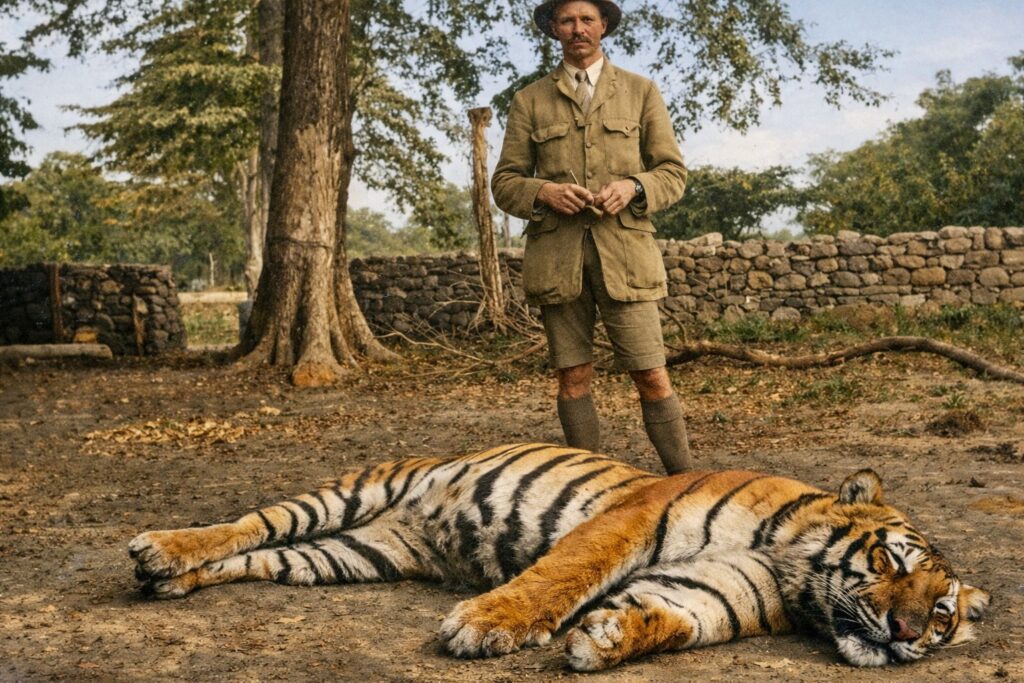
Champawat Tigress: – The infamous Champawat tigress widely considered the deadliest man-eating tiger ever documented was finally brought down by Jim Corbett in 1907. On 12 May of that year, Corbett successfully tracked the animal near the town of Champawat in present-day Uttarakhand, India. With the assistance of nearly 300 local villagers, he organized a coordinated drive to push the tigress out of thick forest cover, creating an opportunity to confront and eliminate the threat. Prior to her death, the tigress was believed to have been responsible for around 436 human fatalities across parts of Nepal and northern India, earning a grim reputation as one of history’s most notorious predators.
This turning point also marked a transformation in Corbett’s own life. Over time, he moved away from hunting and became a strong advocate for wildlife conservation and habitat protection. In recognition of his contributions, India’s first national park was later named Jim Corbett National Park in his honor. Today, landscapes like Jim Corbett represent not only rich biodiversity but also the importance of maintaining harmony between human communities, tourism, and wildlife conservation a message that remains highly relevant in modern India.
Are Tigers Dangerous for Tourists on Safari?
For tourists visiting national parks, the risk is extremely low.
Safari systems in India follow strict safety protocols:
- Visitors remain inside vehicles
- Certified guides accompany all safaris
- Tourism zones are regulated
- Tiger movement is monitored by forest departments
Millions of people visit tiger reserves safely every year.
Conservation Perspective: Tigers Are Victims of Circumstances
A man-eating tiger is often a victim of ecological imbalance.
Conservation strategies focus on:
- Habitat protection
- Increasing prey populations
- Rapid response conflict teams
- Community awareness programs
- Compensation for livestock losses
- Scientific monitoring using camera traps and radio collars
India’s successful tiger conservation programs demonstrate that coexistence between humans and large predators is possible.
Final Words
Tigers do not become man-eaters by nature. Injury, age, hunger, habitat loss, and accidental encounters are the main reasons behind such behavior. Understanding these causes helps reduce fear and promotes conservation awareness. Protecting forests and wildlife habitats ultimately protects both humans and tigers.
Whether you are planning a tiger safari, birdwatching trip, or family wildlife holiday, Wildlife Adventure India aims to provide reliable support, expert guidance, and memorable experiences in India’s most beautiful forest destinations.
Who killed the Champawat tigress?
The Champawat tigress was killed by hunter and conservationist Jim Corbett in 1907 near Champawat in present-day Uttarakhand, India, after it was responsible for hundreds of human deaths across Nepal and India.
Why did the Champawat tigress become a man-eater?
According to historical records, the tigress had severe dental injuries that made it difficult to hunt natural prey like deer and wild animals. As a result, it began targeting humans, who were easier to overpower.
How many people were killed by the Champawat tigress?
The tigress was believed to have caused approximately 436 human fatalities, making it one of the deadliest man-eating tigers ever recorded in history.
Is it safe to visit tiger reserves today?
Yes, visiting tiger reserves is generally safe when you follow park rules. Safari tourism in places like Jim Corbett National Park is strictly regulated, and trained guides accompany visitors to ensure safety.
Are tigers naturally dangerous to humans?
No. Tigers do not naturally hunt humans. Most attacks happen due to injury, old age, habitat loss, or accidental encounters rather than natural aggression.
Can tourists see tigers during safari?
Tiger sightings depend on luck, season, and forest conditions. However, national parks in India offer some of the best opportunities in the world to observe tigers in their natural habitat.