
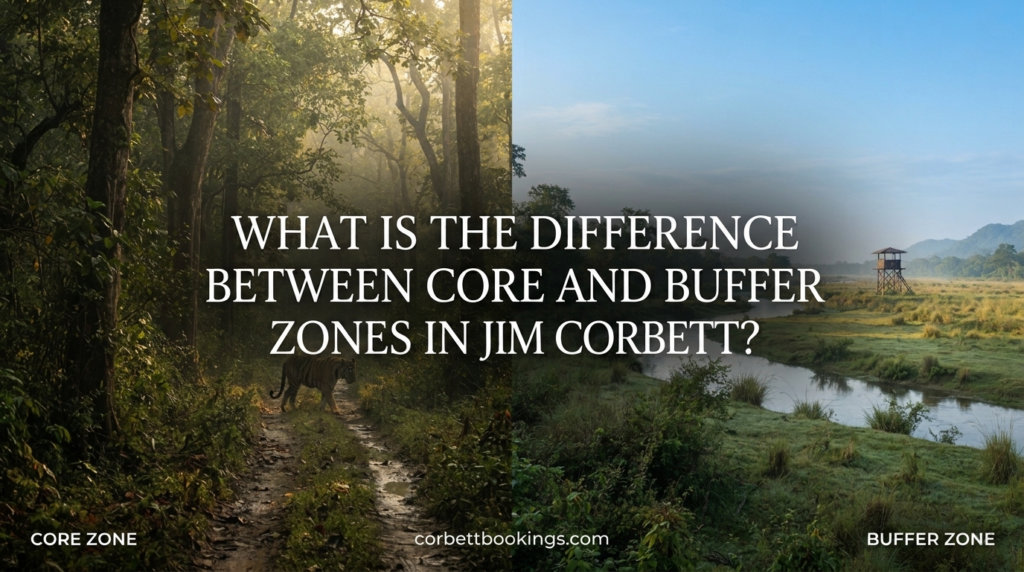
Jim Corbett National Park is part of Corbett Tiger Reserve, which is divided into two major conservation areas: the core zone and the buffer zone. The entire park spans 1,288.31 sq. km, where the core zone, also known as the critical tiger habitat, covers 821.99 sq. km, while the buffer zone covers 466.32 sq. km. The main difference between the core and buffer zones in Jim Corbett is their conservation purpose and the level of human activity permitted within them. The core zone receives a higher level of protection for wildlife and habitat conservation. The buffer zone surrounds or connects with the core area and supports wildlife conservation alongside regulated human activities and community-based development.
Both zones help protect tigers, elephants, and other wildlife across Jim Corbett National Park. Knowing the difference between them makes it much easier for travelers to follow how the park is managed, how safari rules work, and what goes into protecting the forest.
What Is the Core Zone in Jim Corbett?
The core zone is the most strictly protected part of a tiger reserve. It is designated primarily to provide a safe and suitable habitat for tigers and other wildlife, with minimal human disturbance.
In Corbett Tiger Reserve, the core area is officially identified as the Critical Tiger Habitat (CTH). According to the National Tiger Conservation Authority, Corbett has approximately 821.99 square kilometers of core or critical tiger habitat.
The main objective of this area is to maintain natural ecosystems, protect wildlife populations, and support the long-term survival of endangered species.
Key Features of the Core Zone
Some important characteristics of the core zone include:
- Wildlife protection: The area receives priority for tiger conservation and habitat protection.
- Limited human activities: Activities that could disturb wildlife or damage the ecosystem are restricted.
- Habitat conservation: Forests, grasslands, water sources, and natural vegetation are protected.
- Regulated tourism: Tourism may be permitted in designated areas under strict regulations and carrying-capacity limits.
- Ecological importance: The core habitat provides important breeding, feeding, and movement areas for wildlife.
Can Tourists Visit the Core Zone?
Tourists cannot enter the core area freely. Entry is strictly managed through fixed safari routes, valid entry passes, and forest rules.
That said, controlled tourism is allowed in a few marked parts of the core habitat. Anyone visiting has to follow the proper booking process, entry timings, and wildlife safety rules.
Keep in mind that the entire core zone is not open to the public. Several sections of the forest stay off-limits so animals can live without human disturbance.
What Is the Buffer Zone in Jim Corbett?
The buffer zone is the forest belt that sits right around the edges of a tiger reserve’s core habitat. It acts as an added safety net for the forest and helps keep wildlife paths open between the main forest and the land outside it.
According to NTCA data, Corbett Tiger Reserve has approximately 466.32 square kilometers of buffer or peripheral area.
Unlike the core zone, the buffer zone generally allows greater scope for regulated human activities, community participation, and sustainable livelihood opportunities, while continuing to support wildlife conservation.
The buffer area is also important for reducing pressure on the core habitat and encouraging coexistence between local communities and wildlife.
Key Features of the Buffer Zone
The main characteristics of the buffer zone include:
- Wildlife movement: It provides additional habitat and landscape connections for animals.
- Community participation: Local communities can participate in conservation and suitable livelihood activities.
- Regulated human activities: Certain activities may be permitted according to forest and wildlife regulations.
- Ecotourism opportunities: Designated tourism areas can support responsible tourism and local livelihoods.
- Human-wildlife coexistence: Conservation efforts aim to reduce conflicts between people and wildlife.
Can Tourists Visit the Buffer Zone?
Yes, tourists are allowed to visit marked tourism spots in the buffer area, as long as they have official entry passes and stick to the set safari timings.
Still, that does not mean the whole buffer zone is open to the public. Entry is still carefully controlled, and visitors need to stick to the main safari routes and follow the basic park rules.
In fact, several popular safari zones in Corbett sit inside the buffer area and run as part of the park’s official wildlife tourism setup.
What Is the Difference Between Core and Buffer Zones in Jim Corbett?
Although both areas contribute to wildlife conservation, they have different management priorities and levels of permitted human activity.
Here is a simple comparison:
| Feature | Core Zone | Buffer Zone |
| Main Purpose | Strict wildlife and habitat protection | Conservation and coexistence |
| Conservation Priority | Critical tiger habitat | Supporting habitat and landscape protection |
| Human Activities | More strictly restricted | Certain regulated activities may be permitted. |
| Tourism | Allowed only in designated areas under strict rules | Allowed in designated tourism areas |
| Community Participation | More limited due to stricter protection | Greater scope for community-based initiatives |
| Ecological Role | Protects important wildlife habitats | Supports habitat connectivity and reduces pressure on core areas |
| Human-Wildlife Interaction | Managed with stronger restrictions | Coexistence and conflict management are important priorities. |
Both zones are essential to the long-term conservation of Corbett Tiger Reserve. The core area provides stronger protection for wildlife, while the buffer area supports conservation across a wider landscape.
Why Are Core and Buffer Zones Important for Wildlife Conservation?
Both areas work together to maintain a healthy wildlife landscape. Their different management approaches help balance the needs of wildlife, forests, and surrounding communities.
1. Protection of Tigers and Other Wildlife
The core habitat provides a protected environment for tigers and other species. It helps preserve important areas for feeding, breeding, and movement.
2. Protection of Natural Habitats
The core and buffer zones help conserve forests, grasslands, rivers, and other natural resources that support biodiversity.
3. Reducing Human-Wildlife Conflict
The buffer area supports conservation programs and community participation that can help reduce conflicts between people and wild animals.
4. Supporting Sustainable Tourism
When tourism is managed properly in allowed zones, visitors learn why saving wildlife is important, and people living in nearby villages get steady work and income.
5. Maintaining Ecological Connectivity
Wildlife often moves across large landscapes rather than remaining within one protected area. Buffer forests and adjoining habitats can help maintain these important connections.
Frequently Asked Questions
1. What is the main difference between core and buffer zones in Jim Corbett?
The core zone gets top-level protection because it is vital tiger territory. On the other hand, the buffer zone also protects wildlife, though it allows some controlled human activity and includes local communities.
2. Is the core zone completely closed to tourists?
No. Controlled tourism is allowed in a few marked parts of the core area, though guests cannot freely enter the restricted forest sections.
3. Can tourists visit the buffer zone in Jim Corbett?
Yes, travelers can visit the open safari zones in the buffer area, as long as they book in advance and follow the basic park guidelines.
4. How large is the core zone of Corbett Tiger Reserve?
According to the NTCA, the core, or critical tiger habitat, spans around 821.99 square kilometers.
5. How large is the buffer zone of Corbett Tiger Reserve?
The buffer or peripheral area covers approximately 466.32 square kilometers, according to NTCA data.
6. Are tourism zones and core zones the same?
No. A core zone is a conservation-management area, whereas a tourism zone is a designated area for regulated visitor activities. Tourism zones can be located within core or buffer areas.
7. Which zone is better for wildlife conservation?
Both matter a great deal. The core zone offers stricter protection for vital animal habitats, while the buffer zone helps spread wildlife protection across the surrounding forest areas.
8. Are safari bookings available in all core and buffer areas?
No. Safaris are only open in specific tourist zones, and getting a spot depends on slot availability, the season, and basic park guidelines.
Conclusion
Both the core and buffer zones in Jim Corbett do different jobs, and each one is just as important for protecting wildlife. The core zone is all about keeping key tiger habitats safe. On the other hand, the buffer zone looks after the surrounding forest, allows limited human activity, and includes local villagers in the process.
Working together, both zones keep Corbett Tiger Reserve healthy and protect its wide variety of plants and animals. For travellers, knowing how these two areas differ also makes it easier to follow safari rules and plan a respectful trip.
Simply by sticking to official forest rules and giving animals their space, visitors can play a real part in keeping Jim Corbett safe for years to come.