Night Life of Animals in Jim Corbett Forest
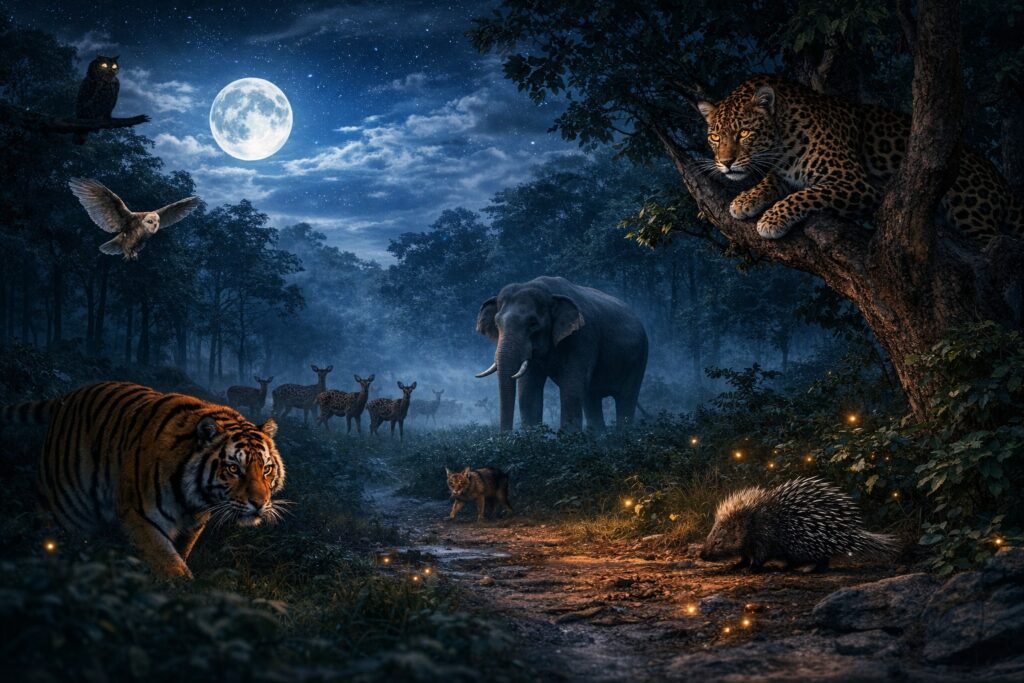
When the sun sets and the forest grow silent, a completely different world awakens inside Jim Corbett National Park. While most visitors experience wildlife during morning and evening safaris, the real jungle drama often unfolds at night. The night life of animals in Jim Corbett Forest is full of mystery, survival instincts, hunting behaviour, and fascinating animal movements that remain unseen by tourists.
This article explores what happens inside the forest after dark, which animals become active, and why nighttime plays a crucial role in the ecosystem of Corbett Tiger Reserve.
Importance of Wildlife Activity at Nighttime.
Many animals in Jim Corbett are nocturnal or crepuscular, meaning they are most active during the night or twilight hours. There are several reasons why animals prefer nighttime:
- Cooler temperatures compared to daytime heat
- Less human disturbance
- Better hunting opportunities for predators
- Reduced risk from larger animals
- Energy conservation
For predators especially, darkness provides the perfect cover to stalk prey without being noticed.
Nocturnal Predators of Jim Corbett Forest
Bengal Tigers — Silent Hunters of the Night
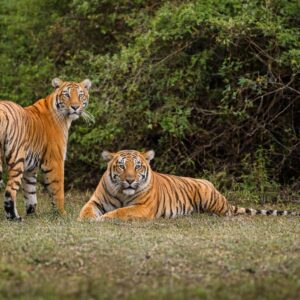
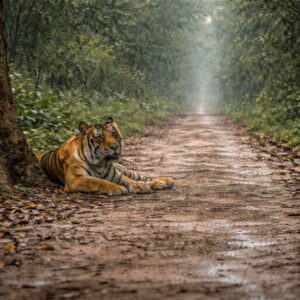
The most famous resident of Corbett, the Bengal tiger, is primarily active during late evening and nighttime. Tigers often patrol their territory, mark scent boundaries, and hunt prey such as deer, wild boar, and sometimes smaller animals after sunset.
Night gives tigers a huge advantage because of their excellent night vision and stealth movement.
Leopards — Masters of Darkness
Leopards are even more nocturnal than tigers. These elusive big cats prefer hunting at night to avoid competition with tigers. They hunt animals like barking deer, monkeys, and small mammals.
Leopards are rarely seen during safaris because they mostly move under the cover of darkness.
Wild Elephants — Night Movement Giants
Asian elephants frequently move at night, especially when traveling between forests and riverbeds. Herds often cross roads, grasslands, and water sources after sunset.
Night movement helps elephants avoid heat and human activity.
Herbivores Active at Night
Many prey animals also become active during nighttime to avoid predators that hunt during the day.
Deer Species
Common deer species seen moving at night include:
- Spotted deer (Chital)
- Sambar deer
- Barking deer
These animals graze cautiously while remaining alert for predators.
Wild Boars
Wild boars are highly active after sunset. They forage for roots, insects, and fruits across forest floors and grasslands.
Their strong sense of smell helps them find food easily at night.
Smaller Nocturnal Creatures of Corbett
Apart from large mammals, the forest comes alive with smaller animals after dark.
Owls and Night Birds
Owls play an important role as nighttime hunters. Their sharp hearing and silent flight allow them to catch rodents and insects efficiently.
Civets and Jackals
Civets and jackals roam the forest searching for fruits, insects, and small animals. These scavengers help maintain ecological balance by cleaning up organic matter.
Porcupines
Indian porcupines are completely nocturnal and move slowly across the forest searching for roots and vegetation.
Sounds of the Jungle at Night
Even though visitors cannot enter the core forest at night, forest lodges sometimes allow guests to hear the sounds of nocturnal wildlife.
Common sounds include:
- Alarm calls of deer warning about predators
- Elephant trumpeting
- Owl hooting
- Insect and cricket sounds
- Distant tiger roars
- Jackal howling
These sounds provide clues about animal movement and predator presence in the area.
Why Night Safaris Are Restricted in Jim Corbett?
Unlike some wildlife parks, night safaris are not allowed in the core zones of Jim Corbett National Park. There are important reasons for this:
- To protect animals from disturbance
- To maintain natural hunting behaviour
- To ensure visitor safety
- To reduce stress on wildlife
- Conservation regulations by forest authorities
However, buffer zones sometimes allow limited tourism activities near sunset hours.
Role of Nighttime in the Corbett Ecosystem
Night activity is essential for maintaining ecological balance in the forest.
Key ecological benefits include:
- Predator-prey population control
- Natural food chain maintenance
- Seed dispersal by animals
- Insect population regulation
- Forest regeneration processes
Without nocturnal activity, the entire ecosystem would become unstable.
Can Tourists Experience Night Wildlife in Corbett?
While direct night safaris are restricted, visitors can still experience the magic of nighttime wildlife in several ways:
- Staying in forest lodges near buffer zones
- Listening to jungle sounds at night
- Early morning safaris when nocturnal animals are returning
- Bird watching during dawn hours
- Tracking fresh animal pugmarks on safari routes
These experiences offer glimpses into the secret life of the jungle.
Best Time to Spot Signs of Night Activity
The best seasons to observe signs of nocturnal wildlife are:
- Summer (March to June) — Animals visit water sources frequently
- Winter (November to February) — Clear tracks and movement patterns visible
- Early Morning Safaris — Highest chances of spotting predators returning from hunts
Safety Tips Related to Night Wildlife
If you are staying near forest areas:
- Avoid walking alone at night
- Do not leave food outside rooms
- Follow resort safety instructions
- Never attempt to enter forest areas after dark
- Stay inside designated tourist zones
Wild animals often move silently and unexpectedly.
About Us — Safari Services & Tour Packages
CorbettBookings.com is operated by Wildlife Adventure India, a travel service provider specializing in wildlife tours and jungle safari experiences. We offer assistance with safari reservations, resort bookings, and customized tour packages for visitors planning trips to Jim Corbett National Park.
Please note that we are a third-party safari service provider, not a government authority. Safari permits are issued by the official forest department as per availability and government regulations. Our role is to facilitate the booking process, provide travel support, and help guests plan a smooth and enjoyable wildlife experience.
With professional guidance, verified accommodations, and dedicated customer assistance, Wildlife Adventure India aims to make your Corbett journey convenient, safe, and memorable.