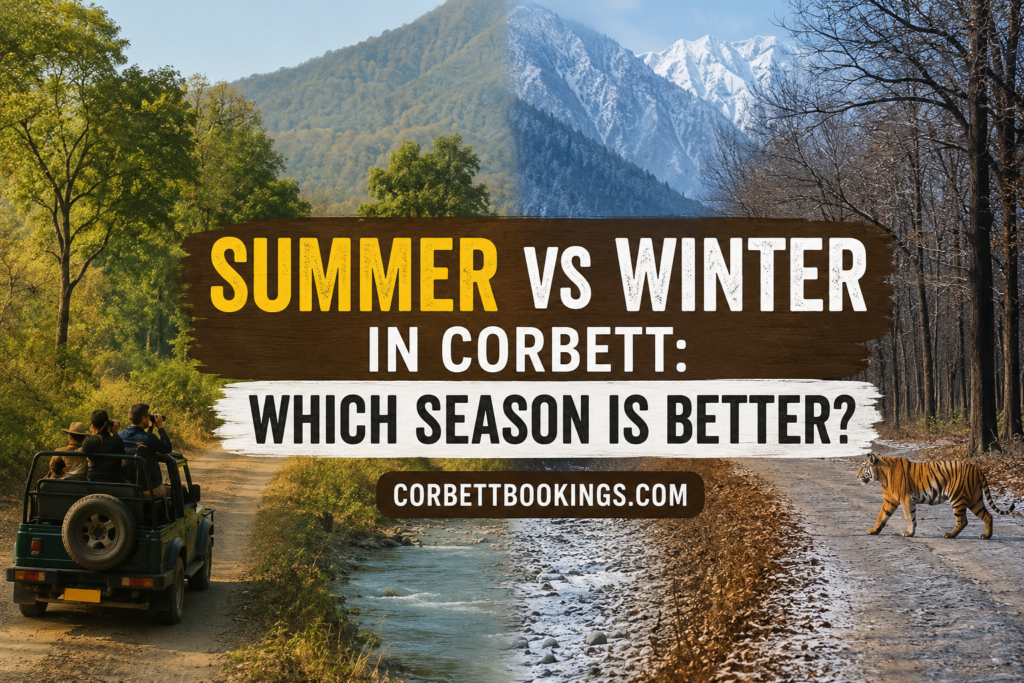
Jim Corbett National Park is one of those rare places where each season feels so different its almost like another world. The same forest that looks kind of golden and dry in May goes misty and green by December. So when people ask, “which season is better for a Corbett trip—summer or winter?” The real honest answer is kinda, it depends on what you are really hunting for and what you want to see.
Let us break it down in a simple, real way so you can pick the right time for your visit.
A Quick Look at Corbett’s Seasons
Corbett has three seasons through the year — summer (March to June), monsoon (July to September), and winter (October to February). The monsoon period sees heavy rainfall and most core zones close down for safety. So the real comparison that matters for most visitors comes down to summer and winter.
Both seasons are great, but for different reasons.
Summer in Corbett (March to June)
Summer at Jim Corbett is intense. Temperatures can go up to 40 degrees Celsius, which sounds harsh, and it is. But this is also the time when the jungle becomes most exciting for wildlife lovers.
Here is why:
As the heat rises, water sources across the forest start drying up. Animals cannot afford to stay hidden — they have to come out and find water. Tigers, elephants, deer, and other animals start gathering near rivers and waterholes. For someone who has always dreamed of seeing a Bengal tiger in the wild, summer gives the highest chance of a sighting.
The vegetation kind of thins out, during summer. Trees drop their leaves, the undergrowth kind of lowers, and you can see way more deeply into the forest, without all that green in the way. On a jeep safari, your field of view opens up a lot more , you notice it right away. That is also why wildlife photographers often choose May and early June, because that seems to bring the best frames.
Morning and evening safaris in summer are truly rewarding. The animals are most active around dawn and dusk. The rest of the day is hot, so staying inside a resort or near the Ramganga River is a good idea.
Summer is also peak season at Corbett National Park. Schools are on vacation, families plan trips, and the demand for safari bookings goes up sharply. If you are planning a summer visit, booking your safari and hotel well in advance is very important.
Best for: Tiger sightings, wildlife photography, family trips during school holidays, adventure travelers who do not mind the heat.
Winter in Corbett (October to February)
Winter turns Corbett into this kind of whole different mood, like somehow everything feels quieter but also more alive. The mornings are cool and misty, and the air just smells, really fresh, the good kind. After the monsoon rains the forest looks green again, kind of full and renewed. Come noon the sun feels, well it’s just right — not too hot, not too cold, and you end up thinking maybe, just maybe staying outside all day is a real plan.
Honestly, this season suits first-time visitors really well, and families too, because the trip stays relaxed and comfortable. The weather doesn’t stress anyone out, not the elders, not the kids, and even people who are usually not comfortable with extremes tend to find it easy here.
And if you’re into birds, winter is when Corbett shines. A lot of migratory bird species reach the area in these months, so the forest feels active, with sound and movement everywhere. Between November and February, the mix of birds you can spot is difficult to match any other time, if you’re the sort of person who actually enjoys watching them you’ll notice the difference right away.
Wildlife sightings are still quite good in winter, just somehow less dependable than in summer. The vegetation gets thicker, so animals can tuck themselves away more easily. That said, tigers, elephants, and leopards do show up during daylight because the cooler temperature makes them more lively, or at least “more active” in a noticeable way. The early mornings and late afternoons still feel like the best window for safaris, really.
All the big safari zones — Dhikala, Bijrani, Jhirna, Dhela, Durga Devi, and Garjia — stay open in winter. The Dhikala Canter Safari which starts from mid-November and continues, gives a broad grassland kind of experience close to the Ramganga reservoir where elephant and deer sightings are, well , very common.
Also, winter is the most preferred travel time at Corbett National Park so weekends and holidays get packed up quickly. Booking a safari in advance is necessary here too.
Best for: First-time visitors, birdwatching, family vacations, photographers who enjoy landscape shots, comfortable travel with elders or children.
Summer vs Winter: A Side-by-Side Comparison
- Tiger Sightings — Summer wins. Animals come to water sources and the open forest makes spotting easier.
- Birdwatching — Winter wins. Migratory birds arrive and the forest feels alive with different species.
- Weather Comfort — Winter wins clearly. Summer can get very hot, especially in the afternoons.
- Jungle Visibility — Summer wins. Sparse vegetation means better sightlines during jeep safaris.
- Crowd Levels — Both seasons are busy, especially on weekends and public holidays. Booking early is key in both.
- Safari Zone Access — Both seasons offer access to all major zones including Dhikala, Bijrani, and Jhirna.
- Photography — Summer is better for wildlife close-ups. Winter is better for misty landscape shots and birds.
- Budget — Prices are similar in both peak periods. Monsoon is the only time you will find significant discounts.
Which Season Should You Choose?
If you want the best chance of seeing a tiger and do not mind the heat — go in summer, especially May and early June.
If you want a comfortable, relaxed trip with good wildlife, beautiful weather, and excellent birdwatching — go in winter, especially November to February.
If you are visiting for the first time and are unsure — November, December, or February are safe choices. The weather is pleasant, the forest is beautiful, and the experience is easy to enjoy.
For families with school-going children, summer aligns naturally with school holidays in India. The wildlife excitement during this period also keeps kids engaged throughout the safari.
For those who love photography, both seasons offer something unique. Summer gives you sharp, dramatic wildlife shots. Winter gives you soft morning light, misty forest backgrounds, and colourful birds.
Planning Your Corbett Visit
Regardless of the season you choose, a few things remain the same. Safari permits at Corbett are limited and get booked quickly especially for popular zones like Dhikala and Bijrani. It is always better to book at least a few weeks in advance.
You can book gypsy safaris (for up to 6 people) or canter safaris (for larger groups of up to 16 people) for Dhikala through corbett safari booking. The website also offers tour packages that combine safari, hotel stay, and meals — making your trip planning much simpler.
Whether you are driving up from Delhi or flying into Pantnagar, the park is well connected and easy to reach. Ramnagar is the nearest town and the base for most visitors.
FAQs
Summer, especially May and June, is the best time. Animals gather near water sources, making tiger sightings more likely.
Yes, winter is very good. The weather is comfortable, all zones are open, and birdwatching is excellent.
Summer temperatures range from 25°C to 40°C. Mornings and evenings are cooler and suitable for safaris.
Winter temperatures range from 5°C to 30°C. Mornings can be quite cold, especially in December and January.
Yes. The park remains open from mid-November to mid-June, covering both seasons comfortably.
Dhikala and Bijrani are highly recommended in summer for tiger sightings and wide-open landscapes.
Dhikala, Bijrani, and Durga Devi are popular in winter. Durga Devi is especially great for birdwatching.
At least 3 to 4 weeks in advance, especially for weekends and peak season months.
Yes. Winter is ideal for families with young children or elders. Summer suits families with school-going kids.
Yes, migratory birds visit Corbett during winter, mainly from November to February.
Conclusion
There is no single wrong choice between summer and winter in Jim Corbett National Park. Both seasons are genuinely rewarding — just in different ways. Summer brings that raw, almost electric thrill of watching wildlife hanging around the water edge, with an even higher chance for a tiger sighting, it feels more vivid. Winter on the other hand brings a kind of comfort , quiet mornings too, green forests all around and then— a sudden pop of birdlife, like it’s everywhere at once.
So pause a moment and think about what counts the most to you, the animal encounter, the seasonal conditions, or the people you are travelling with. Once you know that, Corbett will not disappoint you in any season.