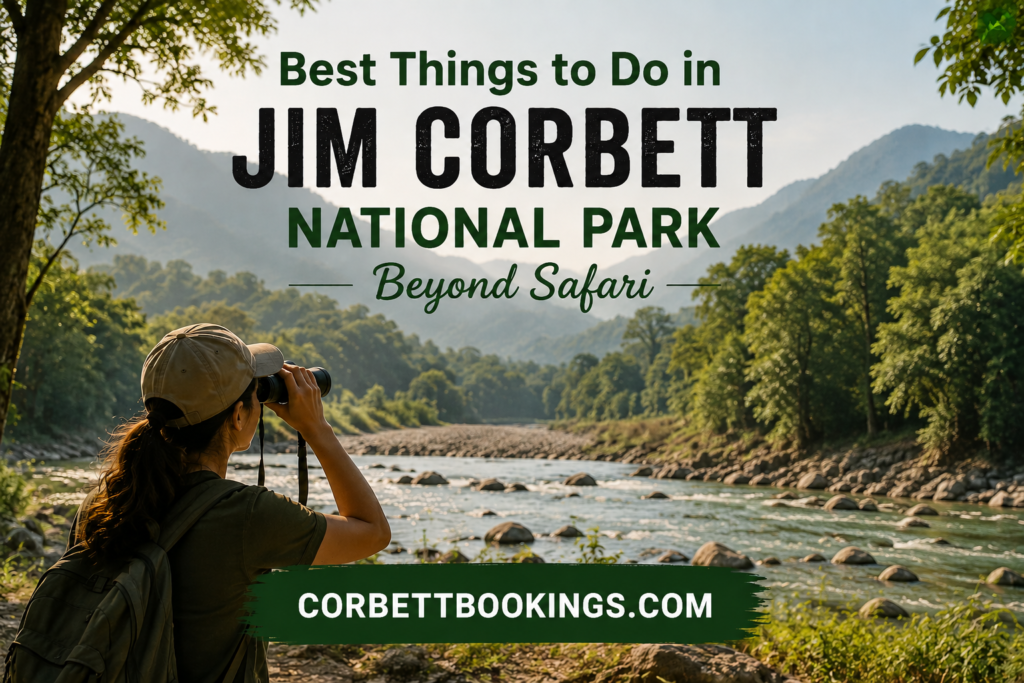
Most people plan a trip to Jim Corbett with one goal, spotting the Royal Bengal Tiger from a jeep. That is, completely understandable, honestly. Jim Corbett National Park is one of the finest tiger reserves in India and a safari here feels like a dream come true for wildlife lovers. But here’s the thing many first-time visitors miss— Corbett is just so much more than a jeep safari.
If you are wondering what to do in Jim Corbett other than safari, you will be surprised to know how rich and layered this destination really is. From peaceful riverside walks and jungle birdwatching to ancient temples and Himalayan stargazing — Corbett has something for every kind of traveller. And whether you are visiting with family, your partner, or a group of friends, there is always more to explore.
Let us walk you through the best things to do in Corbett National Park beyond safari.
Birdwatching — A Paradise for Bird Lovers
Jim Corbett seems to be home to more than 600 species of birds, so it is basically one of the richer birdwatching spots in all of Asia. You really do not have to go into a safari zone , to enjoy it, not at all. In the early morning, just take a slow walk near the Kosi River or along the forest buffer areas , and you can spot hornbills, kingfishers, pied falcons, ospreys, and plenty more besides.
Birdwatching in Jim Corbett is pretty good from November till March, when migratory species kind of arrive from far away regions. If you are a photographer, then mornings along the riverbank are the best, for photos that are actually worth framing. And for families with kids, it can feel like one of the calmer, more teachable activities you can slip into your itinerary, too.
River Rafting on the Kosi River
One of the most exciting things Jim Corbett has, beyond those safari zones, is this river rafting on the Kosi River. It’s available during as well as after the monsoon season , and honestly it feels like the perfect mix of scenic Himalayan views with the buzz of moderate river rapids. Certified guides lead each session, and the overall outing is considered safe for beginners too, plus families with slightly older kids.
As your raft moves through the water, you get to see the forest from a completely different angle — dense tree lines on both banks, birds flying overhead, and the gentle roar of water around you. It is honestly one of those Jim Corbett activities that people often wish they had known about earlier.
Visit Garjia Temple — A Sacred Stop with Stunning Views
Tucked inside the forest near the Kosi River, Garjia Temple is one of the most visited places in Jim Corbett other than safari zones. The temple sits on a rocky outcrop surrounded by water, and it is dedicated to Goddess Garjia Devi. For many local families and travellers, a visit here is both a spiritual experience and a natural one.
The view from the temple of the river and surrounding hills is genuinely beautiful. It is a short detour from Ramnagar, and if you are already at Corbett, missing this spot would be a mistake. Go early in the morning if possible — the light is soft, the crowd is thin, and the atmosphere is peaceful.
Corbett Waterfall — A Hidden Gem Near Ramnagar
About 25 kilometres from Ramnagar, Corbett Waterfall is a 20-metre-high natural waterfall set inside a dense teak forest. It is surrounded by chirping birds and green trees, and the cool mist from the falls makes it a refreshing escape, especially during the summer months.
You can walk through short forest trails to reach the waterfall, take photographs, and enjoy a quiet picnic by the stream. Swimming is not allowed, but the atmosphere alone is worth the visit. This is easily one of the top Jim Corbett offbeat experiences that most tourists overlook.
Nature Walks and Forest Trails
If jeep safaris feel too rushed for you, maybe go for a guided nature walk instead. It’s slower, more hush and kinda observational. A trained naturalist guides you along forest edges or riverbanks, and they point out animal footprints, different plant kinds, bird calls, and insect behaviour that most people on a constantly moving jeep would basically not notice, not even once.
Nature walks are usually 1 to 3 kilometres long and happen in buffer zones or resort grounds within the Corbett area. They are ideal for solo travellers, couples, and anyone looking to genuinely connect with the forest without the noise of a vehicle. This is one of the most underrated things to do in Jim Corbett for those who love mindful travel.
Explore Sitabani Buffer Zone
Sitabani is an offbeat alternative to the main safari zones of Corbett. It is open throughout the year, which makes it a great option even during the monsoon when zones like Dhikala and Bijrani remain closed. Believed to be the place where Goddess Sita rested during her exile, Sitabani has a quiet, almost magical feel.
The forest here is open and easy to walk through. You can visit the ancient Sitabani Temple, spot deer and smaller animals, and enjoy the peaceful forest atmosphere without the crowd that comes with main zones. If you want to experience Jim Corbett beyond the usual tourist trail, Sitabani is a must.
Fishing and Angling in the Ramganga River
The Ramganga River and the Kosi River, running through the Corbett region, seem to be home to the Golden Mahseer, which is one of the most prized freshwater fish in India really. For a lot of people, fishing and angling here is some kind of common pastime, especially if you like being close to the water itself. Still, you will need the proper permit first before you can fish in the designated zones, so don’t skip that part.
Sitting beside a calm river, fishing rod in hand, with forest sounds all around — it is the kind of experience that slows your mind down in the best possible way. This is one of those Jim Corbett trip activities that families and couples both enjoy.
Camping and Bonfire Evenings at Forest Resorts
A lot of resorts around Jim Corbett give this kind of camping experience, not just the usual stay , and yes the bonfire evenings too, especially when winter months roll in. You end up sleeping outdoors, under clean skies , then you wake up with that forest sound, like birds and distant rustling, very relaxing. And later , you sit near the fire, with light music playing, plus little jungle stories being told kind of softly. If the night is clear enough, you can even spot the Milky Way from the open patches around Corbett, which is rare in city life, where it usually disappears right away.
Jim Corbett Museum in Kaladhungi
About 29 kilometers from Ramnagar lies the restored home of Jim Corbett in Kaladhungi. It’s kind of a museum now, showing his photographs, his personal belongings, hunting gear, and those narrated bits about how he went from hunter to conservationist. Honestly it feels like a genuinely interesting spot for history lovers,or anyone who wants to get a clearer picture of the legacy that sits behind the park’s name.
A visit here gives you a much deeper appreciation of what Corbett the man did for Indian wildlife. It pairs nicely with a morning nature walk or a quick trip before or after your safari day.
Planning Your Corbett Trip
If you are heading for a weekend getaway, or perhaps a more protracted holiday Corbett is best visited between October and June . During that time, areas like Dhikala, Bijrani, and Jhirna stay open. And chances of seeing wildlife tend to be higher too, you might notice it. Safari permits however fill up fast, particularly on weekends and around school holidays so it is always wiser to book ahead of time.
For safari bookings, resort packages, and tour planning, Jim Corbett Safari Booking is a helpful option for travelers. You can book gypsy safaris, canter safaris for Dhikala, hotel stays, and customized tour packages — all from one place. Whether it is a 1 Night 2 Days weekend package or a Full Fun Tour spread over 3 nights, there are options to suit different budgets and group sizes.
FAQs — Jim Corbett National Park Beyond Safari
You can enjoy birdwatching, river rafting, nature walks, fishing, visiting Garjia Temple, exploring Corbett Waterfall, camping, and visiting the Jim Corbett Museum in Kaladhungi.
Yes. Jim Corbett has over 600 bird species. Early morning walks near the Kosi River or buffer zones are ideal for birdwatching, especially between November and March.
Yes. River rafting is available on the Kosi River during and after the monsoon season. It is safe for beginners and families with older children.
Sitabani is a buffer zone open throughout the year. It is quieter, less crowded, and has an ancient temple and open forest trails. It is ideal for offbeat travellers.
Absolutely. The 20-metre waterfall is surrounded by teak forests and is a great picnic and photography spot, especially during and just after the monsoon.
October to June is the best time. Safaris and most activities are available during this window. Monsoon months see many zones closed, but Sitabani and outdoor activities like rafting remain available.
Yes. Jim Corbett is excellent for families. Beyond safaris, families can enjoy nature walks, birdwatching, river rafting, camping, and temple visits — all in a safe and beautiful natural setting.
Conclusion
Jim Corbett National Park is not just a tiger reserve — it is a full travel experience waiting to be explored. Yes, the jeep safari is thrilling and should be on your list, but the real depth of this destination comes from everything else it offers. Birdwatching at dawn, sitting beside a roaring waterfall, camping under a sky full of stars, praying at Garjia Temple, or simply walking quietly through the forest — these are the moments that stay with you long after your trip ends.
So the next time you plan a trip to Corbett, do not limit yourself to just one activity. Explore the forest from every angle, and you will come back with stories that go far beyond the safari trail.